The Reside Residency
  • Reside Blog: Maribel Mas
  • Reside Blog: Serena Smith
  • Reside Blog: Richard Devereux
  • Reside Blog: Kate Beck
  • Reside Blog: Marion Piper
  • Reside Blog: Claudia Böse
  • Reside Blog: Bridget H Jackson
  • Reside Blog: Michaela Nettell
  • Reside Blog: Anthony Boswell
  • Reside Blog: Susan Francis
  • Reside Blog: Corinna Spencer
  • Reside Blog: Karl England
  • apply
  • contact
  • Blog

A new stratigraphy... and on

31/7/2013

1 Comment

 
The original images are re-contextualised within a new stratigraphy ... that allude[s] less to a photographed reality and more to a pictorial one. 1000 Words #15
The Reside Residency has provided a conceptual framework within which to review my practice, an opportunity to consider the themes, images and processes that have been important in my work over recent years. Collage in particular, whether with paper or projections, as a process of working out, a process of discovery – and which, of course, relates to montage and my fascination as an animator with layers, with units and their sequencing, with intervals and spaces between. This text from 1000 Words Photography Magazine describes the layers and fissures in Melinda Gibson's works as geological strata – condensed narratives, partially unfolding...
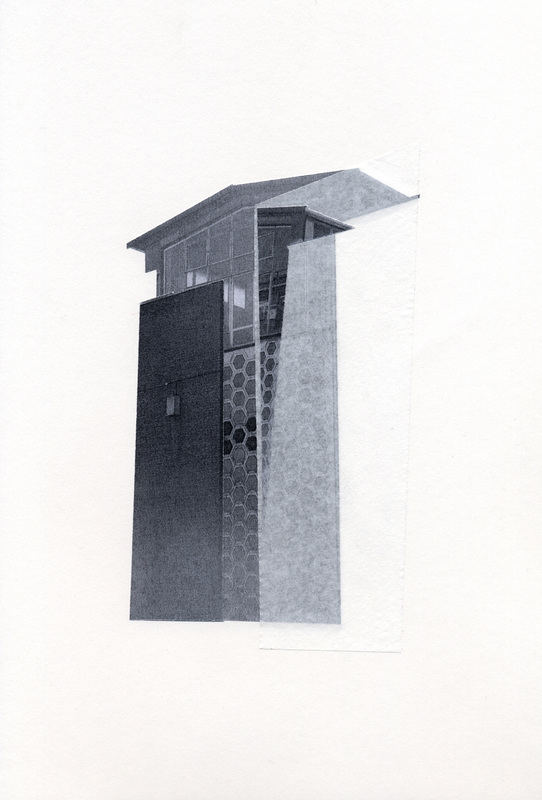
Smithfield I, collage on paper, 2013
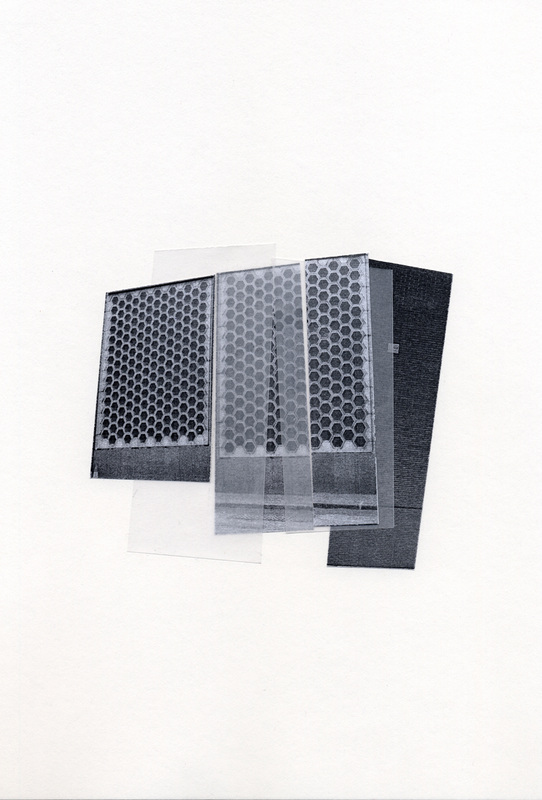
Smithfield II (Concertina'd), collage on paper, 2013
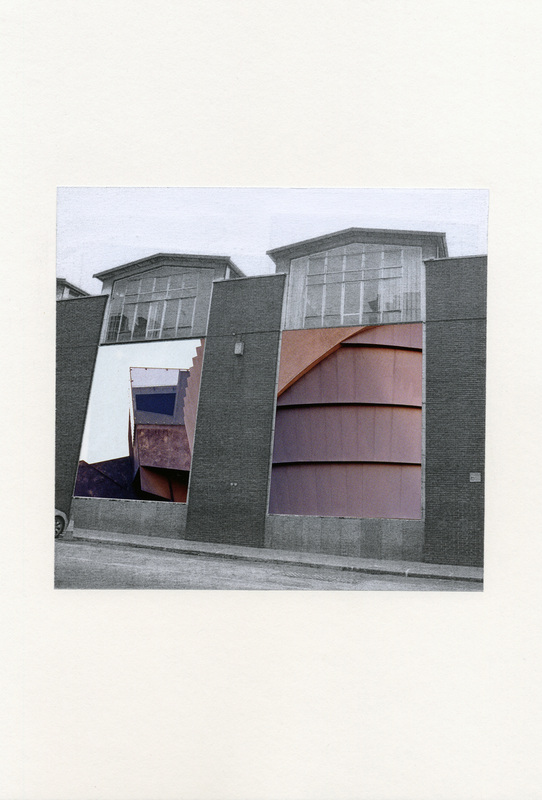
Smithfield III (Beehive), collage on paper, 2013
Smithfield III (Beehive), collage on paper, 2013. Found photo is of The Beehive in Culver City, California (1998), by Eric Owen Moss
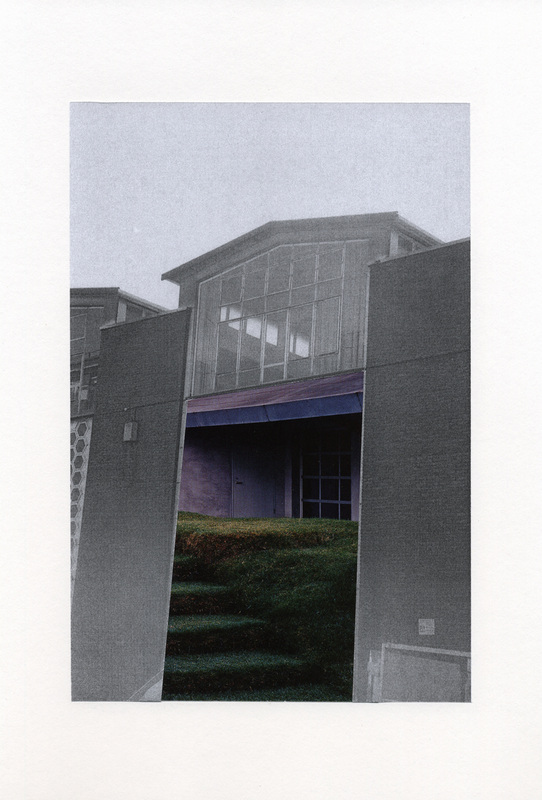
Smithfield III (Beehive), collage on paper, 2013
Smithfield IV (Beehive), collage on paper, 2013
While I haven't been able to make much work since T. was born, I have had plenty of time to daydream. Spending my days at home I've become acutely aware of the impact my immediate (architectural) surroundings have on my thinking, feeling and making. The 1950s council estate – with its post-Festival of Britain optimism, its communality and sense of shared social space, its generous daylighting and use of glass, its hive-like plan and Modern geometry... My blog has provided a repository for these thoughts and occasion to share them.
Importantly, the residency has allowed me to keep hold of my practice and the 'other' (non-domestic) part of my self, to keep these selves joined up and in parallel momentum, to retain a sense of normalcy in what has been probably the most extraordinary six months of my life.
This will be my last post before I pass the baton to the next artist, Bridget Jackson, who is about to embark on a journey of self-reflection, experimentation and play, taking time out to reconsider her artistic practice and imagine possibilities for the future. Rather than being rooted to her home, Bridget is uprooting – her residential space will be transitory, and begins in Berlin...
In many ways my time with Reside has passed in a flash but when I read back over my posts, and remember my Super 8 shoot at London Zoo, or Keith Coventry’s talk on estate plans they feel like a lifetime ago. T. is now 11 weeks old and in wonderful Bachelardian moments I can observe his responses to some of the phenomena I have been writing about – his sensitivity to thresholds for example, when moving from one room or environment to another, particularly from inside to outside; and he is completely spellbound by those flickering shadows...
So thank you again Anthony – and everyone who has read, commented and offered feedback on my blog – for helping me keep things flowing. And welcome Bridget.
1 Comment

Smithfield Poultry Market, 1961-3

15/7/2013

0 Comments

 
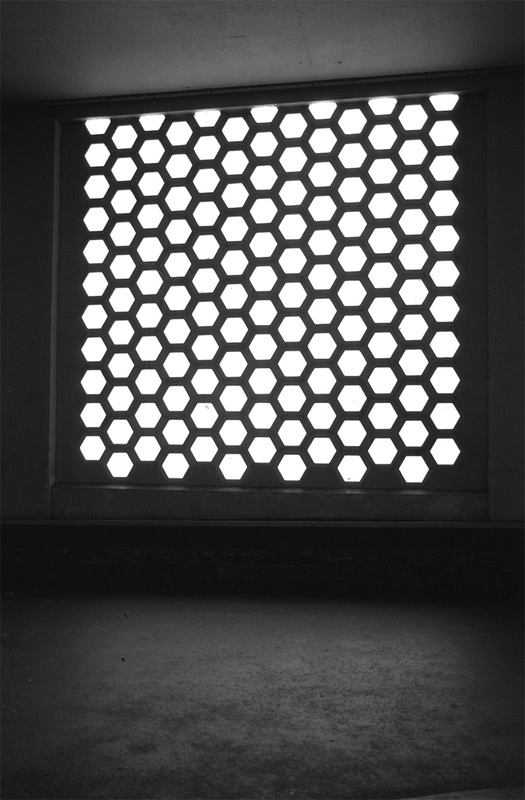
The exterior is a remarkable piece of 'pop architecture' that is absolutely of its time. Nine-bay facades to north and south with hexagonal lozenge lights, resembling those found in pavements lighting basements, with full glazing in metal frames to first floor. Clerestorey glazing at sides under the individual roofs. Clerestory glazing on all sides under projecting copper-clad shell. britishlistedbuildings.co.uk
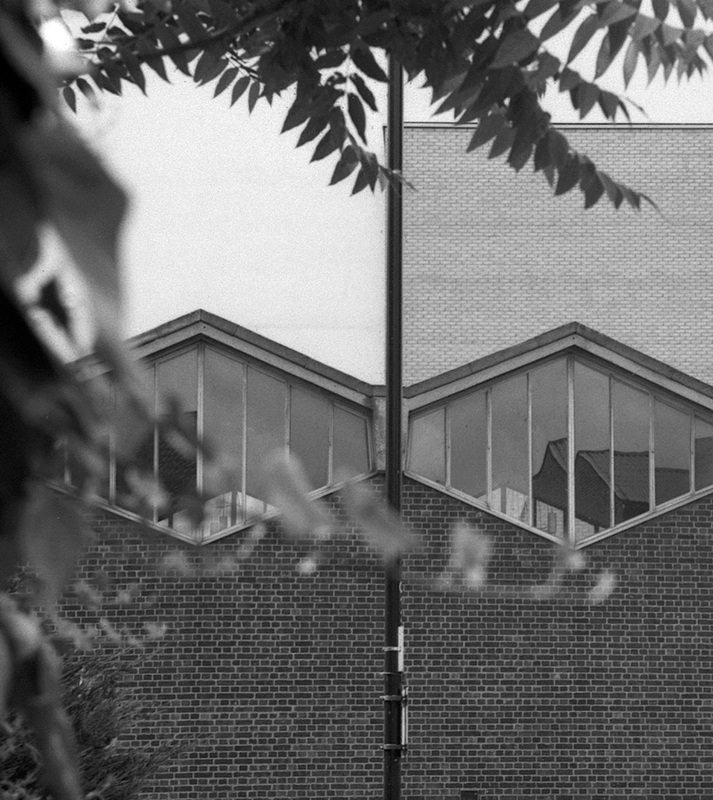
Test shot for 1964 series (
Test shot for 1964 series ("Enormous geometrical constructions suspended in the darkness and emptiness"), 35mm film transferred to digital, 2013
***

If you are interested in being the next Reside artist please take a look at the application information and send your submission via the contact form on this site. The deadline for application is 5pm on Thursday 25 July.
0 Comments

Enormous geometrical constructions suspended in the darkness and emptiness

4/7/2013

0 Comments

 
Salmon Lane Mission
I've tried several times over the past year to visit the church on Salmon Lane but the minister has been reluctant to let me inside - again last Sunday he told me it wasn't possible to look in the chapel, even just to peek at the windows. His resistance adds to the curious, closed and rather dejected feeling of the building and its community which, it seems, will remain something of an enigma to me... So instead I am turning my attention to the hexagonal glass windows in the loading bays at Smithfield Poultry Market.
From the very top of a cupola greater in size than that in St Peter's in Rome right down to the ground, enormous walls of wax, vertical, double and parallel descend; enormous geometrical constructions suspended in the darkness and emptiness...
Re-designed by Thomas Bennet after a fire destroyed the original Victorian building in 1958, the Poultry Market opened in 1963. From the street the walls are imposing, austere, and hive-like in their design: the double-height, tesselating glass and concrete panels topped by 'stacks' of rectangular windows and pitched roofs. Inside, the glass blocks illuminate the bays in stunning geometric pattern - like Modernist, monochrome stained-glass windows. I am reminded of Maeterlinck's description of the beehive-as-cathedral as he imagined how awesome a hive would look to us if we were the size of a worker bee. Also, again, of Ellard and Johnstone's Machine on Black Ground...

***
If you are interested in being the next Reside artist please take a look at the application information and send your submission via the contact form on this site. The deadline for application is 5pm on Thursday 25 July.
0 Comments

Everything Made Bronze

1/7/2013

0 Comments

 
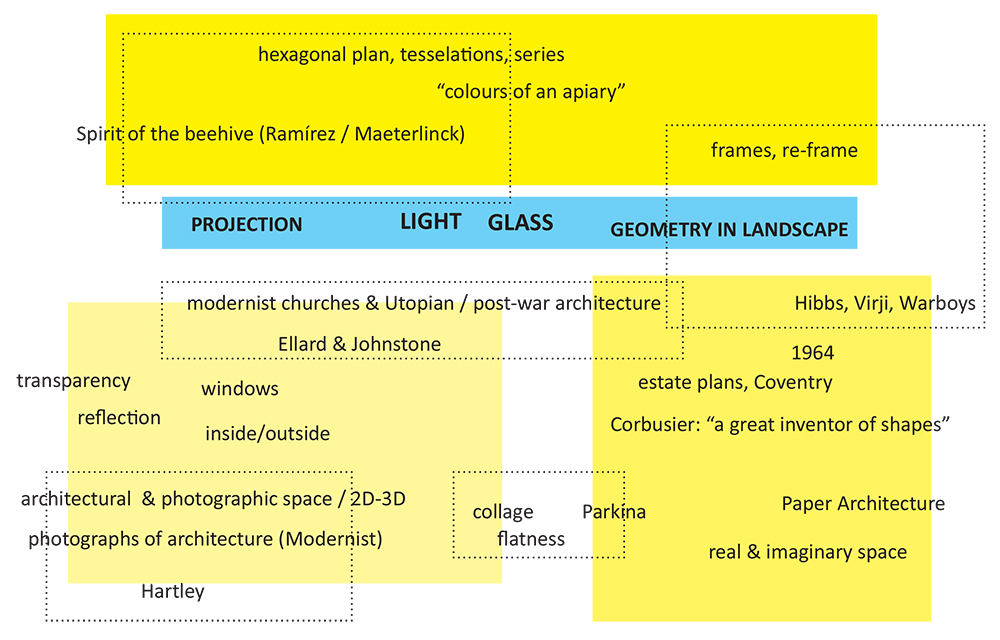
Mind map
Mind map
***

Graham Ellard and Stephen Johnstone's Everything Made Bronze is installed this month in the serene, intimate haven of the Estorick Collection in North London. The film is encountered first - the vintage Eiki and silver screen a poised, slightly theatrical presence in the first floor gallery. The artists' steady, watchful lens observes changing (sun)light over, on and through glass display cases at Carlo Scarpa's Museo Canova in Northern Italy. Shadows, reflections and diagonal light beams render abstract, tectonic patterns in the cabinets' panels; the plaster casts within fade ghost-like in and out of view, bathed in and bleached out by the soft (bronze) rays, but also fractioned, striated by the slices of light. The static camera flattens, abstracts the scene into a geometric collage, the graphic effect heightened by the polka-dot patterns of the sculptor's points. The rich, crystalline reverberation of Colleen's Echoes and Coral seems to fill the room with glass - a dreamy, liquid sound.
Then, in an adjacent room, an acrylic and gold-leaf maquette of the Museo presented in front of, and reflected in the squares of, a paneled sash window. The more abstract, architectonic shots in the film are now revealed to be close-ups of the model and a new dialogue is at once proposed between film and object.

***
Today marks the beginning of my final month with Reside. If you are interested in being the next artist in residence please take a look at the application information and send your submission via the contact form on this site. The deadline for application is 5pm on Thursday 25 July.
0 Comments

    Author

    Michaela Nettell is an artist and filmmaker based in London.

    I work across moving image, photography and installation, creating works that explore the potential of projection and collage techniques to affect relations of space, optics and memory.
    Recent and current works explore relationships between man-made and natural forms, particularly in the urban environment. My ongoing 1964 Series documents incidences of non-orthogonal structures in post-war city architectures, making reference to Frank Lloyd Wright's 'organic architecture' and the hexagonal plan. Colours and patterns of beehives and the honeycomb recur in my work and I often limit my palette to black, white, yellow and blue – Austrian ethologist Karl von Frisch's Colours inside an apiary.
    www.michaela-nettell.com

    Archives

    July 2013
    June 2013
    May 2013
    April 2013
    March 2013
    February 2013

    Categories

    All

    RSS Feed

Powered by Create your own unique website with customizable templates.